
Licensed Florida real estate brokerage
Moving to Florida in Fort Lauderdale, FL
Moving to Florida in Fort Lauderdale and the surrounding area, with a licensed real-estate professional. No obligation.
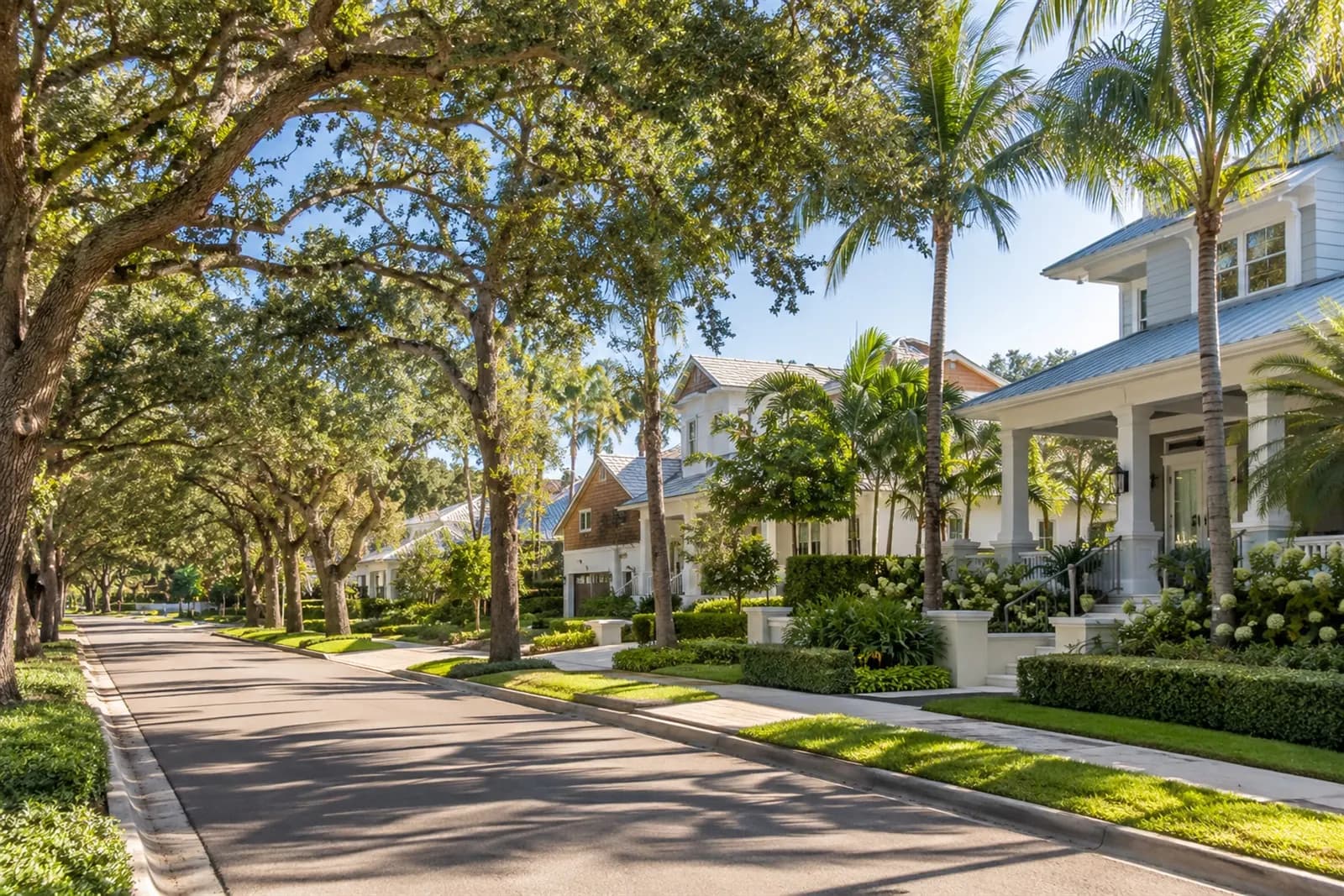
Fort Lauderdale is a city of roughly 184,000 people built around hundreds of miles of canals and Intracoastal frontage — the reason it is called the "Venice of America." The housing stock reflects that history: the median home here was built around 1972, so much of the single-family inventory is 1950s–1970s concrete block and stucco on slab, sitting alongside beachfront and Intracoastal high-rise condominiums and newer townhome and infill construction. According to U.S. Census Bureau ACS 5-year (2022) data, about half of the homes are owner-occupied, so a relocating buyer is shopping in a market that also carries a substantial rental and seasonal component.
If you are moving to Florida from out of state, the practical work is comparing areas by commute, housing type and amenities, deciding whether to rent first or buy first, and understanding Florida insurance basics before you commit. Premier Real Estate Group Inc is a licensed Florida real estate brokerage serving all of Florida — a Florida brokerage license is valid in every county. Your request may be handled by Premier Real Estate Group Inc or referred to a licensed agent, who will contact you by phone or email. The consultation is free and there is no obligation.
Three local considerations shape almost every Fort Lauderdale relocation. First, flood zones: FEMA maps drive whether a lender requires flood insurance in a Special Flood Hazard Area, and homes outside one can still flood — Florida sellers must provide a flood disclosure under s. 689.302, F.S. Second, insurance: with the Atlantic hurricane season running June 1 to November 30 and constant salt air off the ocean and canals, insurers commonly request a four-point inspection (roof, electrical, plumbing, HVAC) on older homes, and wind-mitigation credits are available for documented features under s. 627.0629, F.S. Third, approvals: HOA-governed buildings and gated communities are widespread here, and association approval timelines can sit squarely in the middle of your move-in plan.
What to know in Fort Lauderdale
Flood zone status is a first-week question
With so much canal and Intracoastal frontage in Fort Lauderdale, flood zone and elevation should be checked before you fall in love with a property. A lender generally requires flood insurance on a home in a Special Flood Hazard Area, and flood damage is normally excluded from standard homeowners policies.
Older homes and insurance inspections
Because the typical Fort Lauderdale home dates from the early 1970s, insurers often ask for a four-point inspection, and roof age and condition are frequently the deciding factor in whether coverage is offered at all. A licensed inspector completes the uniform mitigation form OIR-B1-1802 for wind-mitigation credits.
Condo milestone inspections and reserve studies
Fort Lauderdale's beachfront and Intracoastal high-rises fall under Florida rules requiring a milestone structural inspection for condominium and cooperative buildings three stories or taller once they reach 30 years (s. 553.899, F.S.) and a structural integrity reserve study (s. 718.112(2)(g), F.S.). Ask the association for both reports before you commit.
Association approval and estoppel certificates
HOA and condominium associations may require buyer or tenant approval and issue estoppel certificates, and governing documents and budgets are part of due diligence. Approval is never guaranteed, so build the application step into your relocation schedule rather than your moving truck date.
Homestead and Florida residency steps
If the home becomes your permanent residence, you may apply for the homestead exemption with the county property appraiser, generally by March 1 of the year after moving in, with the Save Our Homes assessment cap applying going forward. Relocating households also plan for driver license, vehicle registration and voter registration steps that can support establishing Florida residency.
Closing taxes to budget for
Documentary stamp tax on the deed is 70 cents per 100 dollars of the price (s. 201.02, F.S.); on a new mortgage note it is 35 cents per 100 dollars financed (s. 201.08, F.S.), plus a nonrecurring intangible tax of 2 mills (0.2%) on a new mortgage (s. 199.133, F.S.). Who pays each item is set by the purchase contract and is negotiable — you can estimate with the free Florida Doc Stamp & Closing Tax Calculator at /tools/florida-closing-costs.
How we help
- Compare areas before you fly inWe compare Fort Lauderdale areas by commute, housing type and amenities so you can narrow the search to the kind of housing you actually want — mid-century single-story block homes, a high-rise condominium, or newer townhome construction.
- Video tours and remote showingsRelocating buyers rarely get unlimited trips, so we arrange video tours and remote showings and flag what the camera misses, such as roof age or whether a garage has been converted, both common in this 1970s-era housing stock.
- Rent first or buy firstWe walk through renting first versus buying first, including how association tenant approval and lease paperwork work in HOA and condominium buildings here, so the decision matches your timing rather than the other way around.
- Florida insurance basicsWe explain four-point and wind-mitigation inspections, flood coverage through NFIP or private carriers, and why insurance binding should be lined up before closing. For market-of-last-resort questions, confirm with Citizens Property Insurance Corporation and the Florida Office of Insurance Regulation.
- Association timelines and documentsWe help you request governing documents, budgets, and — for condominium buildings three stories or taller — milestone and SIRS reports, and keep the approval application moving alongside the contract.
- Homestead reminder after closingAfter closing we remind you to apply for the homestead exemption with the county property appraiser; portability applies only if you held a prior Florida homestead. Confirm details with the property appraiser, the Florida Department of Revenue, and a Florida attorney or CPA.
Florida rules and paperwork in Fort Lauderdale
Florida real estate is regulated by the Florida Department of Business and Professional Regulation (DBPR), Division of Real Estate, under the Florida Real Estate Commission (FREC). The paperwork for a relocation purchase or lease in Fort Lauderdale is the same as anywhere in Florida: brokerage relationship disclosure, the purchase contract or lease, seller disclosures including the residential flood disclosure under s. 689.302, F.S., condominium or HOA governing documents and approval applications, and title and closing documents. For condominium buildings three stories or taller, ask about milestone inspection status (s. 553.899, F.S.) and the structural integrity reserve study (s. 718.112(2)(g), F.S.). Out-of-state agents generally cannot perform brokerage services in Florida without a Florida license, though referral arrangements between brokerages are common — you can verify any license status with DBPR, and verify tax and exemption questions with the county property appraiser.
Premier Real Estate Group Inc is a licensed Florida real estate brokerage (broker license BK3314523). Verify at Florida DBPR.
Timing and next steps
Relocation activity in Florida peaks in winter and early spring, while seasonal visitors are in state, and again in summer for households moving before the school year. In Fort Lauderdale that overlaps the November–April snowbird season, when seasonal residents return and long-vacant homes are opened up, and the late-spring-through-fall stretch when storm preparation and hurricane season (June 1–November 30) dominate. None of that predicts how quickly any particular home sells or rents. To start, call (954) 703-4504 or send a request with the form on this page, and a licensed real-estate professional — Premier Real Estate Group Inc or a licensed agent we refer you to — will contact you by phone or email.
Searches often include Victoria Park, Rio Vista, Coral Ridge, Las Olas Isles, Colee Hammock, Sailboat Bend, Flagler Village, Imperial Point, Poinsettia Heights, Tarpon River, Croissant Park and Galt Ocean Mile, plus nearby Wilton Manors, Oakland Park, Lauderdale-by-the-Sea, Pompano Beach, Plantation, Dania Beach, Davie and Hollywood.
Moving to Florida in Fort Lauderdale: common questions
- Do I need flood insurance in Fort Lauderdale?
- It depends on the FEMA flood map designation for the specific property. A lender generally requires flood insurance on a home in a Special Flood Hazard Area, and with the canals and Intracoastal frontage throughout the city, homes outside one can still flood. Flood damage is typically excluded from standard homeowners policies and needs separate NFIP or private coverage.
- Why do insurers keep asking about the roof?
- The median Fort Lauderdale home was built around 1972, so most of the inventory is older stock where insurers commonly request a four-point inspection covering roof, electrical, plumbing and HVAC. Roof age and condition are frequently the deciding factor in whether coverage is offered at all, so confirm requirements with your insurance agent early.
- What should I ask about a Fort Lauderdale condominium?
- Ask the association for the milestone structural inspection report, required for buildings three stories or taller at 30 years under s. 553.899, F.S., and the structural integrity reserve study under s. 718.112(2)(g), F.S. Also request governing documents, budgets and the buyer approval application, since approval timelines are part of your move schedule and are never guaranteed.
- When do I apply for the homestead exemption?
- If the Fort Lauderdale home becomes your permanent residence, you apply with the county property appraiser, generally by March 1 of the year after moving in. The exemption reduces taxable value and brings the Save Our Homes assessment cap going forward. Portability applies only to a prior Florida homestead — verify with the county property appraiser.
- Which closing taxes apply here?
- Statewide documentary stamp tax on the deed is 70 cents per 100 dollars of the price, documentary stamp tax on a new mortgage note is 35 cents per 100 dollars financed, and a nonrecurring intangible tax of 2 mills applies to a new mortgage. Who pays each item is set by the purchase contract and is negotiable; the free calculator at /tools/florida-closing-costs can help you estimate.
Moving to Florida in nearby cities
Tell us about your move — Fort Lauderdale
Where you're headed, when, and whether you'll buy or rent. A licensed real-estate professional will contact you.
Licensed brokerage
Premier Real Estate Group Inc
Broker of record Maxim Bohadana, Florida broker license BK3314523
(954) 703-4504